
Plumbing
Most plumbing quotes in this area are shaped by two things that have nothing to do with the fixture on the invoice: how hard the water is where you live, and when your house was built. Both vary considerably across Bucks and Montgomery County, and both are worth understanding before you compare estimates.
- Independent local contractors
- A cost range in about 60 seconds
- Free — contractors pay us, not you
- Offer times you're home, if you like
Get your estimate
A few questions about the job, a range in about a minute. No sign-up.
What do you need help with?
Takes about 60 seconds · No obligation · A range, not a quote
Plumbing costs
at a glance
| Kind of job | Typical range |
|---|---|
| Clearing a blocked drain | $100 – $400 |
| Fixture work | $300 – $1,200 |
| Leak repair | $300 – $2,500 |
| Water heater | $1,400 – $3,400 |
| Sump pump | $1,200 – $3,000 |
| Tankless conversion | $3,500 – $7,500 |
| Sewer line repair | $2,500 – $8,000 |
| Your project, answered in a minute | Get a range → |
Ranges come from the same calculator the estimate uses, so this table and your estimate can never disagree. They are planning figures for this region, not a quote — a contractor prices the job after seeing it. Estimated range only. Final pricing requires contractor evaluation.
How much does plumbing cost?
Hard water, and what it quietly costs
Water hardness here depends on which system serves you, and the groundwater-fed systems run genuinely hard.
Horsham's water authority publishes hardness of 200-350 mg/L, averaging 275 — about 16 grains per gallon, which is classified very hard. Buckingham Township, drawing entirely from wells, reports 100-150 mg/L, or 7 to 10 grains. If you are on a private well the number is whatever your well is, and nobody knows it until it is tested.
The practical effect is on equipment life rather than on any single repair. Scale accumulates in tank water heaters and shortens them; it is harder on tankless units, which is why most manufacturers require periodic descaling and some make it a condition of warranty. It furs up fixture cartridges and shower valves. When a water heater here fails noticeably earlier than the number on the sticker, hardness is usually a large part of why.
Lead service lines — an active programme, not a historical note
This is live work happening right now in parts of Bucks County.
Aqua Pennsylvania has replaced close to 3,000 lead and galvanized service lines since 2024, roughly 470 of them in Bucks County, at no direct cost to the customer, under federal and state requirements. Around 2,100 test holes were scheduled in Bristol alone. If you are an Aqua customer in one of those municipalities, this is worth knowing before you pay anyone to investigate your service line.
The Levittown area is the interesting exception. The Lower Bucks County Joint Municipal Authority states its system is lead free because its rules have required Type K copper or cast iron since 1952 — the year the development started going up. Different vintage, different problem.
Wells and septic are a county matter
Building permits come from your township. Sewage and well permits do not — those come from the county health department, which catches people out.
This affects more households than you might expect. Doylestown Township reports that over half of its 6,000 households rely on private wells, and its Ordinance 299 requires septic pumping and inspection every three years by an approved hauler, plus coliform and E. coli testing every three years on private-well properties. Those are enforced obligations, not recommendations.
How old your house is changes the job
Bucks County's housing stock is roughly 9.8% pre-1940 and another 19.8% from the 1940s and 1950s; Montgomery County is broadly similar in age but with considerably more multifamily. What that means in practice depends on where you are standing.
The older boroughs. Doylestown's historic district alone has 1,055 contributing buildings and Norristown's around 1,900, with construction starting in 1800. Cast iron waste stacks, galvanized supply lines and decades of partial repairs are normal here. Access is usually the cost driver, not the part.
Levittown. The 17,311 homes built between 1952 and 1958 span four municipalities and were built slab-on-grade with no basements. That single fact changes almost everything about plumbing work there — there is no crawlspace to run a new line through, and a repair under the slab is a different job from a repair in a basement.
The 1960s-1990s suburbs. The largest share of both counties. Generally straightforward, with the usual questions about original water heaters and whatever the last owner did themselves.
When you need a permit
Pennsylvania's code requires a permit for the installation, alteration, repair, removal or replacement of any plumbing system. "Ordinary repairs" are exempt — but the regulation specifically excludes adding to or relocating water supply, sewer or drainage piping from that exemption. So swapping a failed water heater for the same thing in the same place may be treated differently from moving it, and any project that relocates a fixture needs a permit.
There is an emergency provision worth knowing: equipment may be replaced before the permit is issued as long as the application is filed within three business days. Nobody has to sit without hot water waiting for an office to open.
Permits here are municipal, not county. Pennsylvania's Uniform Construction Code sets the floor, but over 90% of the state's 2,562 municipalities administer and enforce it themselves, each with its own office, fees and inspection scheduling. Every municipality in Bucks County has opted in. Municipalities that opted in before 1999 may also carry local amendments that exceed the state baseline — and the state openly says it has no record of what those amendments are, so there is no central place to look them up.
One thing worth knowing in advance: the sewage and well permits go the other way. Those are issued by the county health department, not your township. A project that touches both — a bathroom addition on a septic system, say — needs two offices rather than one.
Pennsylvania requires anyone doing more than $5,000 a year of home improvement work to register with the Attorney General's office. Registration numbers start with "PA", carry minimum insurance requirements, and are searchable on the state's public register. Contracts for work over $500 must also give you three days to cancel. Asking for the number is reasonable and every registered contractor expects it.
Don't guess what your project will cost.
Answer a few questions and see a range for your house before anyone calls you.
What affects the cost?
The things the estimate actually asks about — these change the number, not the wording.
Kind of job
A blocked drain, a leak, a water heater and a sewer line are different jobs with different ranges — not one job at different prices.
Access
Basement, crawlspace or slab. What is in reach is quick; what is under concrete is not.
Fixtures and materials
A builder-grade fixture and a designer one install the same way and cost very differently.
What turns up
Corroded pipe, a failed shut-off, water damage behind the wall — found on opening up, priced on the day.
Permit and inspection
Municipal, not county. Clearing a drain needs none; a repipe or a sewer line does.
Common questions
Why do water heaters seem to fail early around here?
Hard water is usually a large part of it. Horsham's system averages about 16 grains per gallon, which is classified very hard, and Buckingham reports 7 to 10 grains from its wells. Scale accumulates inside a tank heater and shortens its life, and it is harder still on tankless units — which is why most manufacturers require periodic descaling and some make it a warranty condition.
Do I need a permit to replace a water heater?
Usually yes. Pennsylvania's code requires a permit for the installation or replacement of any plumbing system, and the "ordinary repair" exemption explicitly does not cover adding to or relocating water supply or drainage piping. Because permits are issued municipally, the exact treatment of a like-for-like swap varies by township. If it is an emergency you can replace first and file within three business days.
Who permits a septic system or a well?
The county, not your township — which is the reverse of building permits. Bucks County's health department handles on-lot sewage permitting and runs a residential well inspection programme, and Montgomery County has an equivalent office. Some townships add their own requirements on top: Doylestown Township requires septic pumping and inspection every three years, and well testing on the same cycle.
Is my service line lead?
It depends on the water system and the age of the connection. Aqua Pennsylvania is actively replacing lead and galvanized service lines across parts of Bucks County — roughly 470 since 2024, at no direct cost to the customer — so if you are an Aqua customer it is worth checking their inventory before paying anyone to investigate. The Levittown area's authority states its system is lead free because its rules have required copper or cast iron since 1952.
Related guides
All articles →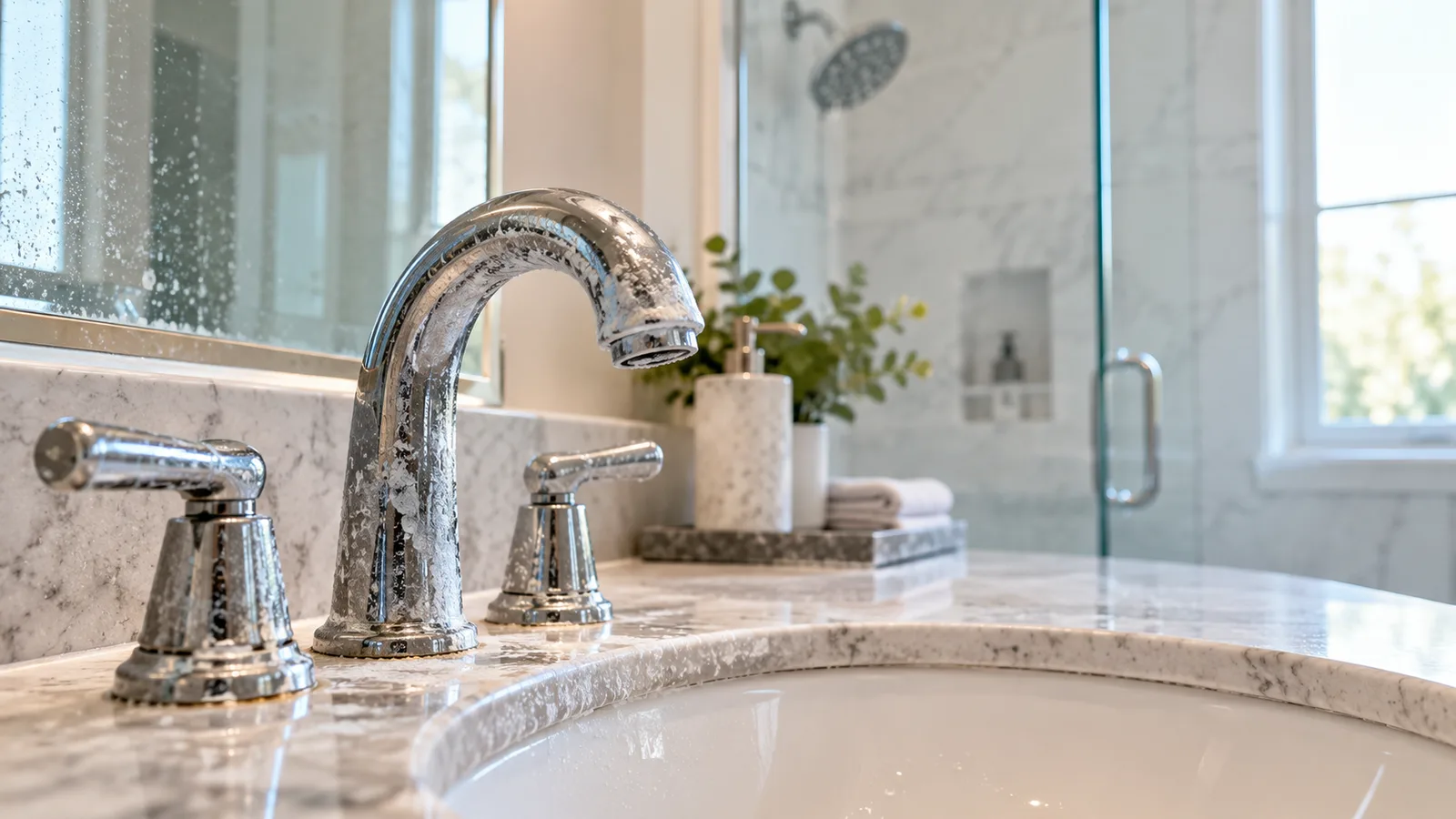 Article
How hard is the water here, really?
Horsham averages about 16 grains per gallon — squarely 'very hard'. Buckingham runs 7 to 10. What those numbers do to a water heater, and what is worth doing about it.
 Article
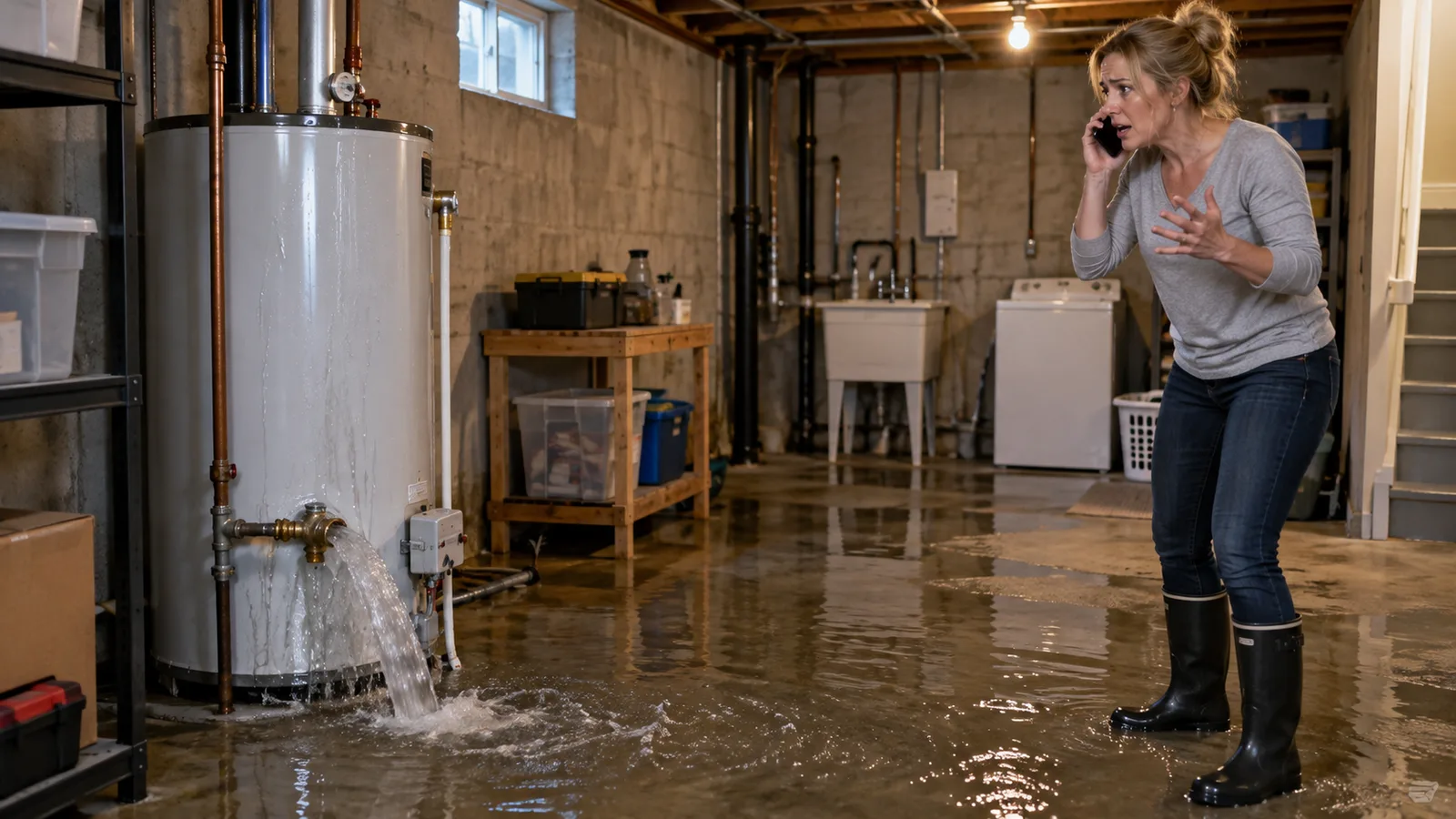
Do you need a permit to replace a water heater here?
Short answer: almost always yes, and it is your township that issues it, not the county. What the regulation actually says, and the three-day rule for emergencies.
 Article
Well and septic: the one permit that is not municipal
Building permits in Pennsylvania are issued by your municipality. Sewage and well permits are not — they go through the county health department. Which office you need, and when.