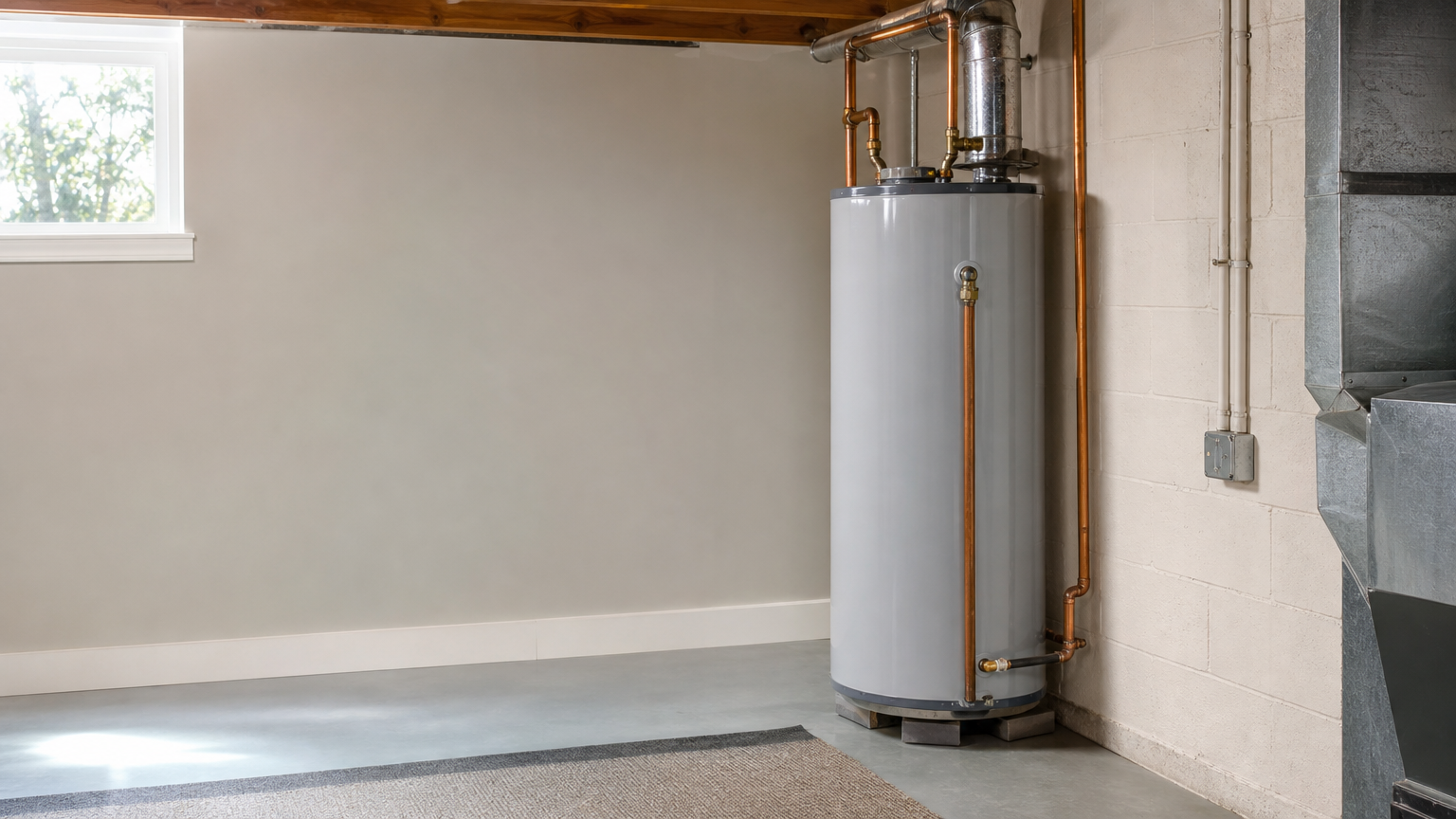
Water Heater Replacement Cost in Doylestown, PA
Replacing a tank water heater in Doylestown typically runs $1,400 – $3,400; switching to tankless runs $3,500 – $7,500. Size and fuel move the number, and whether you are in the Borough or the Township changes who issues the permit.
- Independent local contractors
- A cost range in about 60 seconds
- Free — contractors pay us, not you
- Offer times you're home, if you like
Get your estimate
A few questions about the job, a range in about a minute. No sign-up.
What's happening with the water heater?
Takes about 60 seconds · No obligation · A range, not a quote
Doylestown water heater replacement costs
at a glance
| Kind of job | Typical range |
|---|---|
| Water heater repair | $200 – $800 |
| Water heater | $1,400 – $3,400 |
| Tankless conversion | $3,500 – $7,500 |
| Your project, answered in a minute | Get a range → |
Ranges come from the same calculator the estimate uses, so this table and your estimate can never disagree. They are planning figures for this region, not a quote — a contractor prices the job after seeing it. Estimated range only. Final pricing requires contractor evaluation.
How much does water heater replacement cost in Doylestown?
A like-for-like tank replacement in Doylestown lands in the $1,400 – $3,400 range. The low end is a same-size, same-fuel swap on the existing connections; the high end is a larger tank, a fuel change, or venting and shut-off work the current code asks for that an older installation never had.
Doylestown is two places for permit purposes. The Borough is the walkable centre with the historic district; the Township wraps around it, and over half of its households are on private wells. A Borough address in a house from the 1800s means the cost driver is access — what has to come apart to reach the heater, and what turns up when it does. A Township address on a well means sediment and mineral content that a heater on public water never sees, which is worth a filter ahead of the tank.
A repair on a unit worth keeping runs $200 – $800. On a tank past ten years, a repair is usually money towards a replacement rather than instead of one.
Don't guess what your project will cost.
Answer a few questions and see a range for your house before anyone calls you.
What affects the cost?
The things the estimate actually asks about — these change the number, not the wording.
Tank size
Under 40, 40–50, or over 50 gallons. Going up a size can mean new venting and a bigger footprint.
Fuel type
Natural gas, electric, propane or oil. Changing fuel is a bigger job than changing tanks.
Switching to tankless
New venting, a larger gas line and often a dedicated circuit — the unit is the smaller part.
Where it sits
A closet with the connections in reach is a quick swap. Relocating means new lines and, on a slab, opening concrete.
Permit and inspection
Issued by your municipality, not the county. A contractor usually files it and books the inspection.
Water heater replacement in Doylestown, PA
Doylestown's historic district covers 206 acres and 1,055 contributing buildings, predominantly Late Victorian and Federal, with construction running from the early 1800s into the 20th century. In houses of that age the cost driver is usually access and discovery rather than materials.
Doylestown Borough requires a permit for any new installation of electrical, heating or air conditioning equipment, replacements included. Every such permit is routed through Zoning, mechanical equipment may not sit in a required setback yard, and inspections need 48 hours' notice.
In the surrounding township, over half of roughly 6,000 households rely on private wells. A local ordinance requires septic pumping and inspection every three years, and coliform and E. coli testing on the same cycle for private-well properties.
Every municipality in Bucks County has opted in to enforcing the state construction code locally, so your permit comes from your own township or borough office. Municipalities that opted in before 1999 may also carry local amendments exceeding the state baseline — and the state keeps no central record of what those are.
Bucks County's housing is older than it looks from the newer developments: about 9.8% predates 1940 and another 19.8% went up in the 1940s and 1950s, with the largest single cohort — 29.1% — built between 1960 and 1979.
Aqua Pennsylvania has replaced close to 3,000 lead and galvanized water service lines since 2024, roughly 470 of them in Bucks County, at no direct cost to the customer. If you are an Aqua customer it is worth checking their inventory before paying anyone to investigate your service line.
Pennsylvania requires anyone doing more than $5,000 a year of home improvement work to register with the Attorney General. Registration numbers begin with "PA", carry minimum insurance requirements, and are searchable on a public register — and any contract for work over $500 must give you three days to cancel.
Building permits here are issued by your municipality rather than the county. Pennsylvania's Uniform Construction Code sets the floor, but over 90% of the state's 2,562 municipalities administer and enforce it themselves — so fees, forms and inspection scheduling differ from one township to the next.
Pennsylvania moved to the 2021 International Code family and the 2020 National Electrical Code on 1 January 2026. Among the residential changes: a surge-protective device is now required at the service panel, including when existing service equipment is replaced.
Sources: en.wikipedia.org · doylestownborough.net · doylestownpa.org · pa.gov · cdn.dvrpc.org · aquawater.com · hicsearch.attorneygeneral.gov · pa.gov · codeadministrators.com
Common questions from Doylestown homeowners
Which office issues the permit — the Borough or the Township?
Whichever your property is in, and a Doylestown mailing address does not tell you. Doylestown Borough is the centre, including the historic district; Doylestown Township surrounds it. Each issues its own permits under the state construction code. Your contractor should know which applies before the work is scheduled — ask.
Does an old house make a water heater replacement more expensive?
It can. In a house from the 1800s the equipment is the same price as anywhere; what changes is access and what is found — an undersized flue, galvanised supply lines, a shut-off that no longer shuts off. A contractor who has seen the installation can price for that; one quoting by phone cannot.
I'm on a well. Does that change the job?
Not the replacement itself, but it changes what protects the new heater. Well water carries sediment and dissolved minerals that public water is treated for, and both settle in a tank. A sediment filter ahead of the heater, and a yearly flush, are inexpensive next to replacing a tank early.
Can I go up to a bigger tank?
Often. A larger tank is taller or wider, so it has to fit the space, and its venting has to be sized for it. A contractor checks both on site before quoting.
Is the estimate a quote?
No. It's a range built from what you tell us about the job. A quote comes after a contractor has looked at the installation — and one who offers a firm price sight-unseen is guessing.
Related guides
All articles →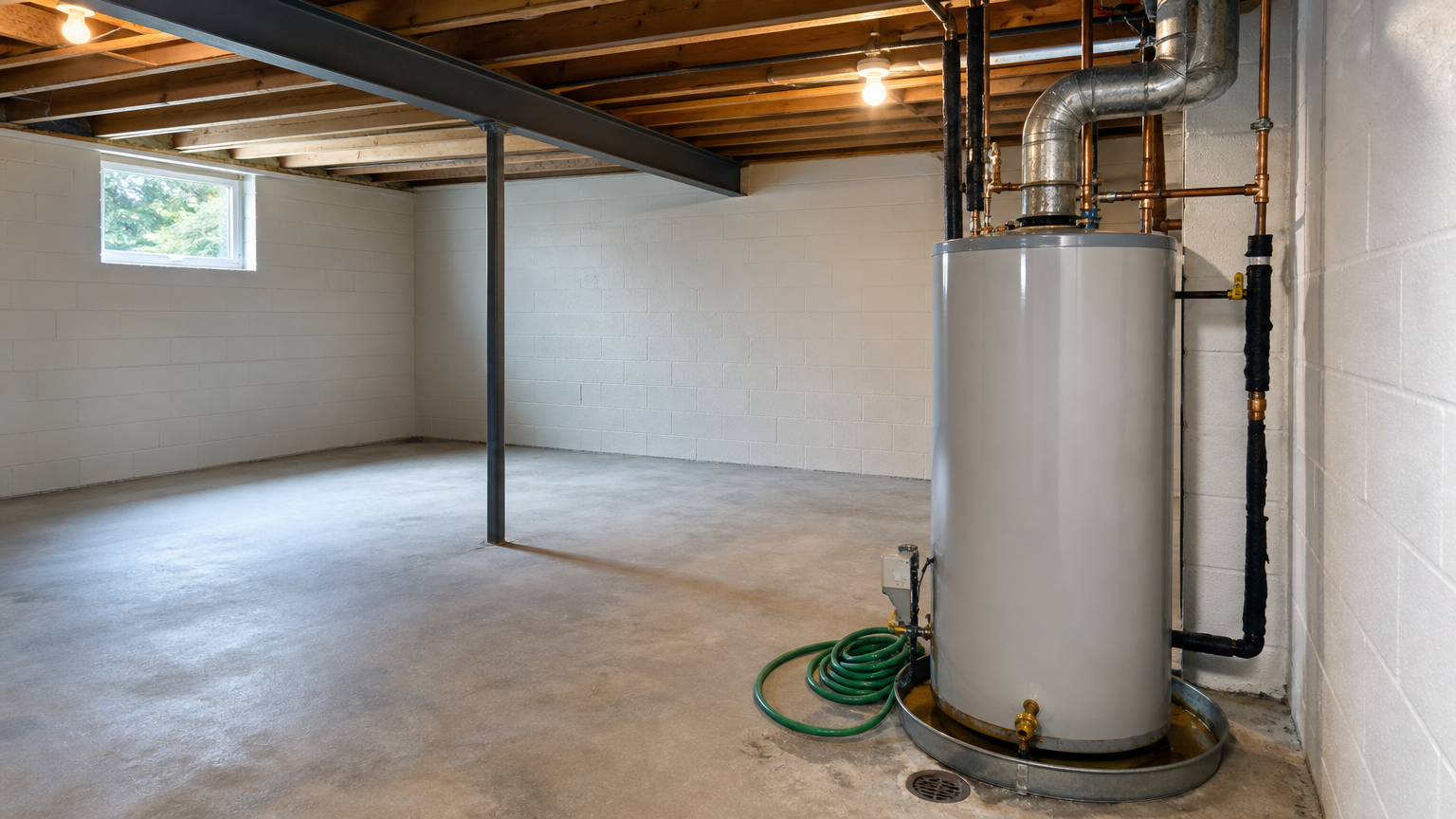 Article
Gas water heater leaking from the bottom: what to shut off first, and what a same-week 50-gallon replacement runs here
Water pooling under a gas water heater in Bucks or Montgomery County? What to shut off, in what order, and what a same-week 50-gallon swap costs.
 Article
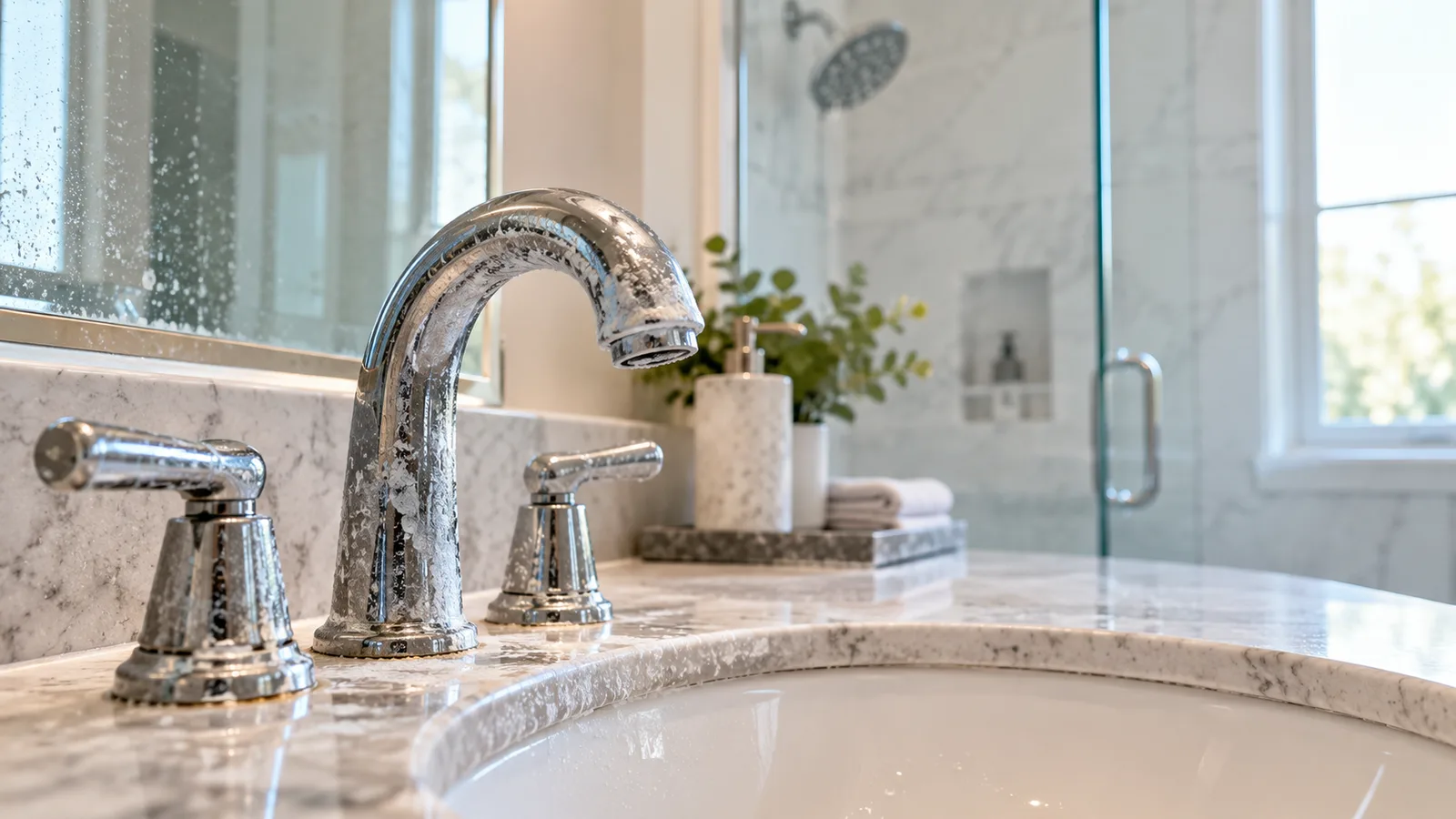
How hard is the water here, really?
Horsham averages about 16 grains per gallon — squarely 'very hard'. Buckingham runs 7 to 10. What those numbers do to a water heater, and what is worth doing about it.
 Article
Levittown was built on slabs, and it still shows
17,311 homes built 1952–1958 across four municipalities, all slab-on-grade. Why that one construction decision still shapes what work costs and how it is done.